

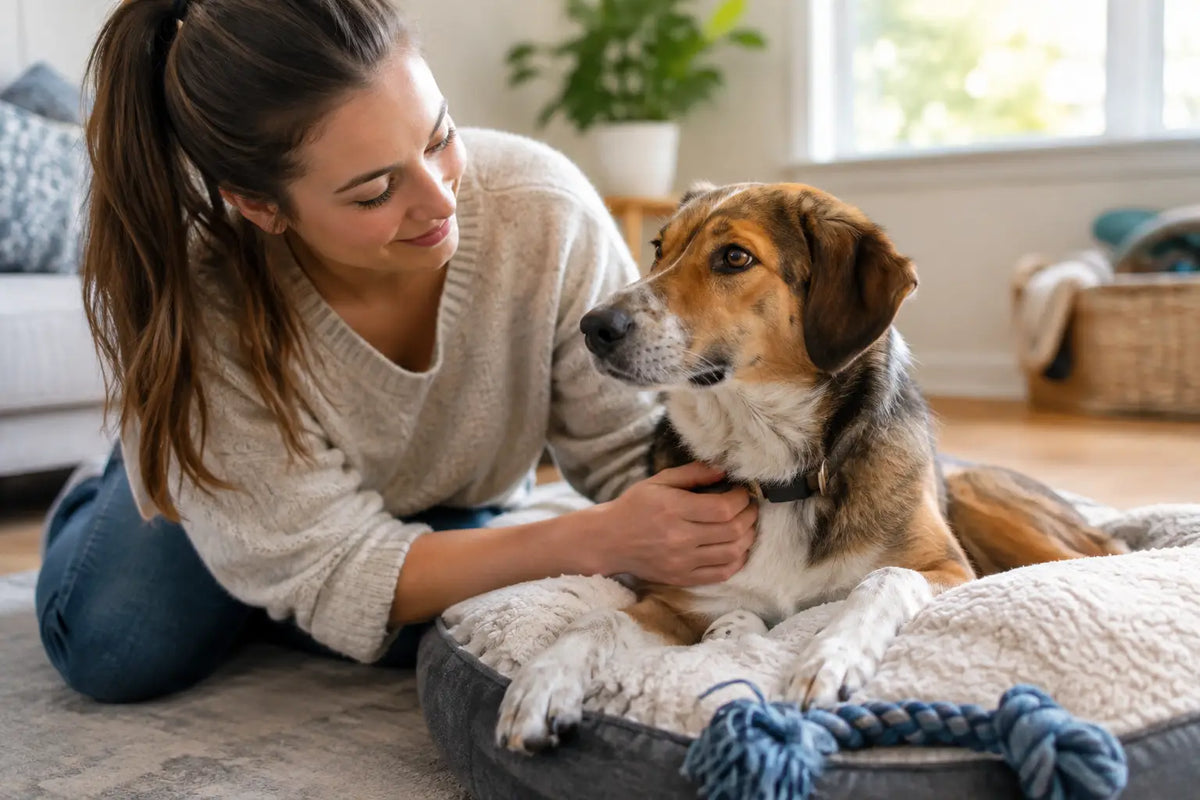
The first night home can look nothing like the adoption photo. Your new dog may pace, hide behind the couch, skip dinner, shadow you room to room, or sleep so deeply they seem completely checked out. None of that means you made the wrong match. Learning how to help rescue dogs adjust starts with giving them something many have not had in a while: safety that does not disappear.
A rescue dog is not a blank slate, and they do not owe anyone instant gratitude, cuddles, or perfect manners. They are taking in new smells, new sounds, new people, and a whole new routine. Some have known a loving foster home. Others have moved through shelters, transport, medical care, or multiple homes. Your job is not to rush the bond. It is to make the next right thing predictable.
Start Small, Slow, and Boring
The most helpful first-week plan is not a packed schedule of introductions and adventures. It is a quiet home base. Keep visitors to a minimum, skip the dog park, and save the big family gathering for later. A dog who seems social at the shelter can still become overwhelmed once the adrenaline wears off.
Set up one calm area with a bed or open crate, fresh water, and a few safe items to investigate. Let the crate be an invitation, never a punishment. If your dog chooses a closet, corner, or spot under a table, do not drag them out to socialize. Sit nearby, speak softly, and let curiosity do the work.
For the first several days, keep walks simple and close to home. Sniffing is not wasted time. It is how dogs gather information and decompress. A short, low-pressure sniff walk is often more useful than a long march through a busy neighborhood full of barking dogs, traffic, and strangers reaching for a hello.
Build a Routine Your Dog Can Trust
Dogs settle when life becomes easier to predict. Feed meals at roughly the same times, offer potty breaks on a dependable schedule, and create a consistent bedtime rhythm. You do not need to run your home like a boot camp. You just want your dog to learn that meals arrive, people come back, and rest is protected.
Keep their initial diet steady if possible. A sudden food switch, combined with stress, can lead to loose stool, skipped meals, or a seriously unsettled gut. If you need to change foods, do it gradually and talk with your veterinarian if digestive upset persists. Happy gut, happier dog, and yes, perfect poos are a worthy adjustment goal.
Food can also help create positive associations, but use it thoughtfully. Toss a small training reward away from you rather than asking a nervous dog to take it from your hand. That lets them choose distance and still learn that good things happen around you. For a dog who eats too fast, use an appropriate slow-feeding setup instead of making mealtime another source of frustration.
Give Every Dog a Choice
Rescue dogs often have had very little control over where they go, who handles them, and what happens next. Tiny choices can rebuild confidence. Let them decide whether to approach. Offer two quiet resting spots. Pause at the door and allow a moment to sniff before heading out.
Choice does not mean no boundaries. It means pairing kind structure with respect. Use baby gates, closed doors, and a leash indoors when needed to prevent trouble before it starts. Management is not a failure. It is smart dog parenting.
Read the Dog in Front of You
A wagging tail is not always an invitation, and a dog who tolerates touch is not necessarily enjoying it. Watch the whole body. Soft eyes, loose muscles, easy movement, and a relaxed mouth usually signal comfort. Lip licking when no food is present, turning away, yawning, pinned ears, a tucked tail, freezing, or showing the whites of the eyes can signal stress.
When you see stress, add distance and reduce the demand. Do not insist that your dog "say hi" to guests, meet every neighbor, or pose for the perfect welcome-home photo. Consent counts with dogs, too.
Children need special coaching during this stage. Keep interactions calm and supervised, and make the dog’s rest area off-limits. Teach kids to call the dog over rather than chasing them, pet briefly on the shoulder or chest if the dog welcomes contact, and stop when the dog walks away. A retreating dog is communicating politely. Let them.
Help Rescue Dogs Adjust Through Gentle Training
Training is not about proving who is in charge. It is communication, confidence building, and a practical way to help your dog succeed in a human home. Start with easy skills that make daily life smoother: responding to their name, touching a hand target, coming a few steps toward you, and settling on a mat.
Use brief sessions, generous rewards, and an upbeat voice. End before your dog loses interest. A timid dog may need you to reward a glance in your direction. A bold, busy dog may need help practicing calm. Both are progress.
Avoid punishment-based corrections, especially for fear-driven behavior. Yelling, leash jerks, spray bottles, and forced exposure may suppress a warning sign without changing the feeling underneath it. A dog that is scared of strangers does not become comfortable because they were scolded for barking. They may simply learn that strangers predict scary things from both directions.
If your dog guards food, growls when handled, panics when left alone, reacts strongly on leash, or has a bite history, bring in qualified help early. Start with your veterinarian to rule out pain or medical factors, then work with a credentialed force-free trainer or veterinary behavior professional. A growl is useful information, not bad behavior to punish.
Introduce the World in Manageable Pieces
New dogs do not need to meet every person and dog in the first month. Introduce new experiences one at a time and at a pace your dog can handle. For dog-to-dog meetings, choose neutral space, use loose leashes, and keep the first interaction short. Not every dog wants canine friends, and that is okay.
Household pets deserve a slow introduction, too. Separate spaces, scent swapping, gates, and carefully supervised sessions protect everyone. With cats, do not allow chasing rehearsals. With resident dogs, feed separately and remove high-value items until you know the group can relax around them.
Guests can be especially hard for newly adopted dogs. Ask visitors to ignore the dog at first. No leaning over, staring, reaching, or calling them repeatedly. A guest who calmly sits down and tosses treats off to the side is far more convincing than one who loudly declares themselves a dog person.
Expect Progress to Zigzag
You may have heard of the 3-3-3 rule: three days to decompress, three weeks to learn the routine, and three months to begin feeling at home. It can be a useful reminder to be patient, but it is not a deadline. Some dogs open up in hours. Others need many months. Many seem easy at first, then show anxiety, fear, or big feelings after they finally feel safe enough to express them.
Track small wins instead of waiting for one dramatic transformation. Maybe your dog ate breakfast with you nearby, chose their bed instead of the corner, made eye contact on a walk, or slept through the mail carrier. Those moments are the real freedom walk happening inside your home.
Simon Says Pet was built around the belief that dogs deserve more than a second chance. They deserve the practical care, patience, and everyday support that lets that chance stick. The best gear, treats, or calming routine can support the process, but your consistency is the foundation.
Tonight, make the house a little quieter. Let your new dog sniff the yard for an extra minute. Sit nearby without asking for anything. Trust is not a trick to teach. It is a promise you keep, one calm day at a time.


